

A performer in avant-garde runway stylingCulture

Runway Resistance: From Underground to Global Spotlight

By Lin-Su Wang · Véronique Global Edition

Underground ballroom culture, long the heartbeat of fashion innovation, has stepped into the spotlight.

Ballroom did not arrive in mainstream fashion. Mainstream fashion arrived, very late, at ballroom. That distinction matters, and the community that built the scene — Black and Latino queer and trans performers in Harlem, from the late 1960s onward — is increasingly unwilling to let it be flattened by a documentary crew or a runway reference nobody credits. What is undeniable is the influence. Watch the tapes of Paris couture from the last three seasons and the debt to ballroom is everywhere: the exaggerated shoulder, the sculptural hip, the confrontational walk, the theatrical proportions, the specific vocabulary of poses that designers now build entire finale looks around. Vogueing, once a form of coded resistance danced in rented halls at three in the morning, is now the movement language of luxury campaigns. The choreographers being hired to teach couture models how to walk are, more often than not, mothers and fathers of houses from New York, Paris, and Tokyo. The scene itself has not stopped moving. If anything, it has grown. Balls now happen weekly in Paris, London, Berlin, Tokyo, Mexico City, São Paulo, Johannesburg, and Manila, each with its own houses, its own legends, its own dialect of categories. The Kiki scene — the younger, more accessible layer beneath the traditional Major houses — has become a global training ground for the next generation of performers, designers, and stylists. Many of the people currently shaping the visual language of international luxury came up on a Kiki floor. What gets lost when the culture is imported wholesale into a fashion week press kit is the point of the culture. Ballroom exists because its founders were locked out of everywhere else. It is a system of chosen family — houses led by mothers and fathers who raised, fed, and often literally sheltered members who had been rejected by biological family. The categories, the walks, the trophies are the visible part. The care structure underneath is the actual architecture. You cannot lift the aesthetic without engaging the ethic.

Culture products on Amazon
Advertisement · Amazon CultureShop →

Some of the industry is figuring this out. A handful of luxury houses are now doing what should have been done a decade ago: hiring performers from the scene not as one-off references but as long-term collaborators, paying properly, crediting on the show notes, and funding the balls themselves. Others are still cutting checks to the wrong people. The community can tell the difference, and increasingly, so can the audience. The brighter development is that the scene is producing its own designers, its own photographers, its own magazines, and its own runway shows now — outside the traditional fashion week structure and, in many cases, outperforming it in cultural impact. What used to be underground is now, for a growing global audience, the main stage. The old fashion establishment is going to have to catch up. It is a good problem for the establishment to have. The talent has been there the whole time. The only thing that changed is who is finally allowed to hold the microphone.

Disclosure: This article contains affiliate links. We may earn a commission if you purchase through them — at no extra cost to you.

About this story: Underground ballroom culture, long the heartbeat of fashion innovation, has stepped into the spotlight.

More in Culture

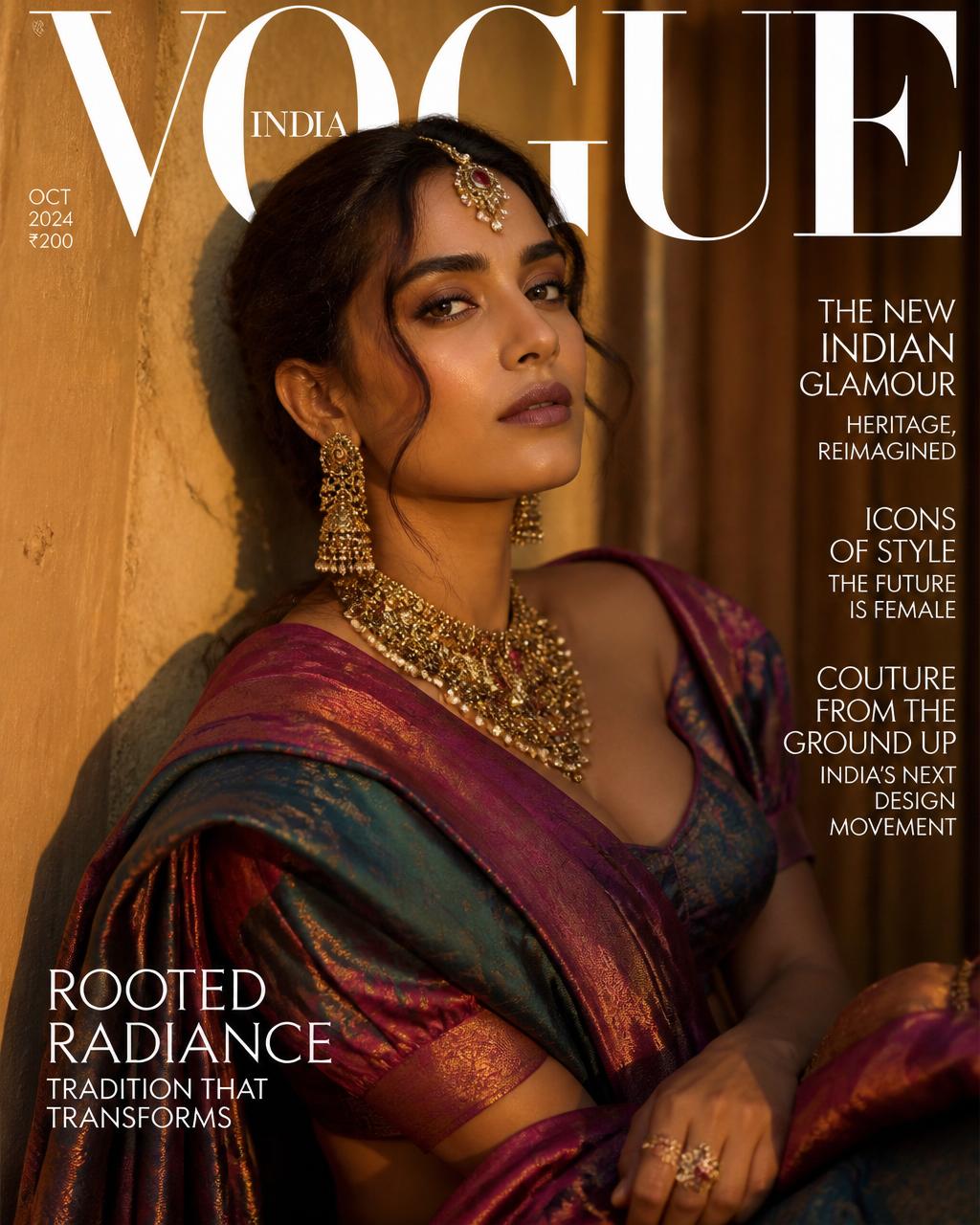
Editorial portrait of a woman in a modern sari with gold jewelryCulture · By Anika Reddy

Rooted Radiance: How India is Rewriting Global Glamour

There is a particular kind of light in Jaipur in late October — low, gold, and unhurried — that makes everything it touches look like it was made by hand. Inside a courtyard atelier off the old city walls, a karigar is stitching the final row of zardozi onto a silk panel that will travel, three weeks from now, to a runway in Paris. He has been working on it since June. He is fifty-one years old. His father did the same work, in the same room, for forty years. This is the part of Indian fashion the international press still tends to miss. The runways are loud and photographable, the colors travel well on social, the celebrity wattage is undeniable. But the real story is quieter and older: a country in which couture-level handwork never stopped being a daily profession. While European houses spent the last decade reckoning with the slow disappearance of their petites mains, Indian ateliers in Lucknow, Kolkata, Varanasi, and Jaipur kept training apprentices the way they always had — by sitting them next to a master and handing them a needle. What is new is the design language wrapped around that craft. A generation of designers educated between Mumbai, London, and New York is treating heritage not as costume but as material — something to be cut, draped, deconstructed, and re-proposed for a global wardrobe. The sari is reappearing as a pre-draped, zipped silhouette engineered for a working week. Bandhani prints are being scaled up and used as the entire field of a tailored coat. Mirror work is migrating onto denim. None of it apologizes for itself. It helps that the country's domestic market is now large enough to support real risk. A decade ago a young Mumbai label needed an export buyer to survive its second season. Today, the wedding economy alone — estimated at well over fifty billion dollars annually — sustains entire ateliers, photographers, hair and makeup teams, and a small army of stylists whose work is as polished as anything coming out of Milan. International recognition has become a consequence of domestic confidence, not a precondition for it. The beauty story is following the same arc. Indian skincare brands are exporting Ayurvedic formulations that have, depending on how you count, somewhere between five hundred and two thousand years of testing behind them. Saffron, turmeric, kumkumadi, sandalwood — ingredients once filed under 'wellness' are being reformulated to the standards of contemporary cosmetic science and sold in matte glass bottles in Seoul, London, and Brooklyn. The marketing, increasingly, is unembarrassed about where it comes from. What ties all of this together is a refusal of the old global hierarchy in which Indian craft was raw material and European branding was the value-add. The designers we spoke with — eight of them, across four cities, over six weeks — were uniformly bored by the question of whether they wanted to be 'on the world stage.' They are already on it. What they want is for the world to stop describing them as emerging. It is a fair request. The work is here. The light is here. The hands have been here the whole time.
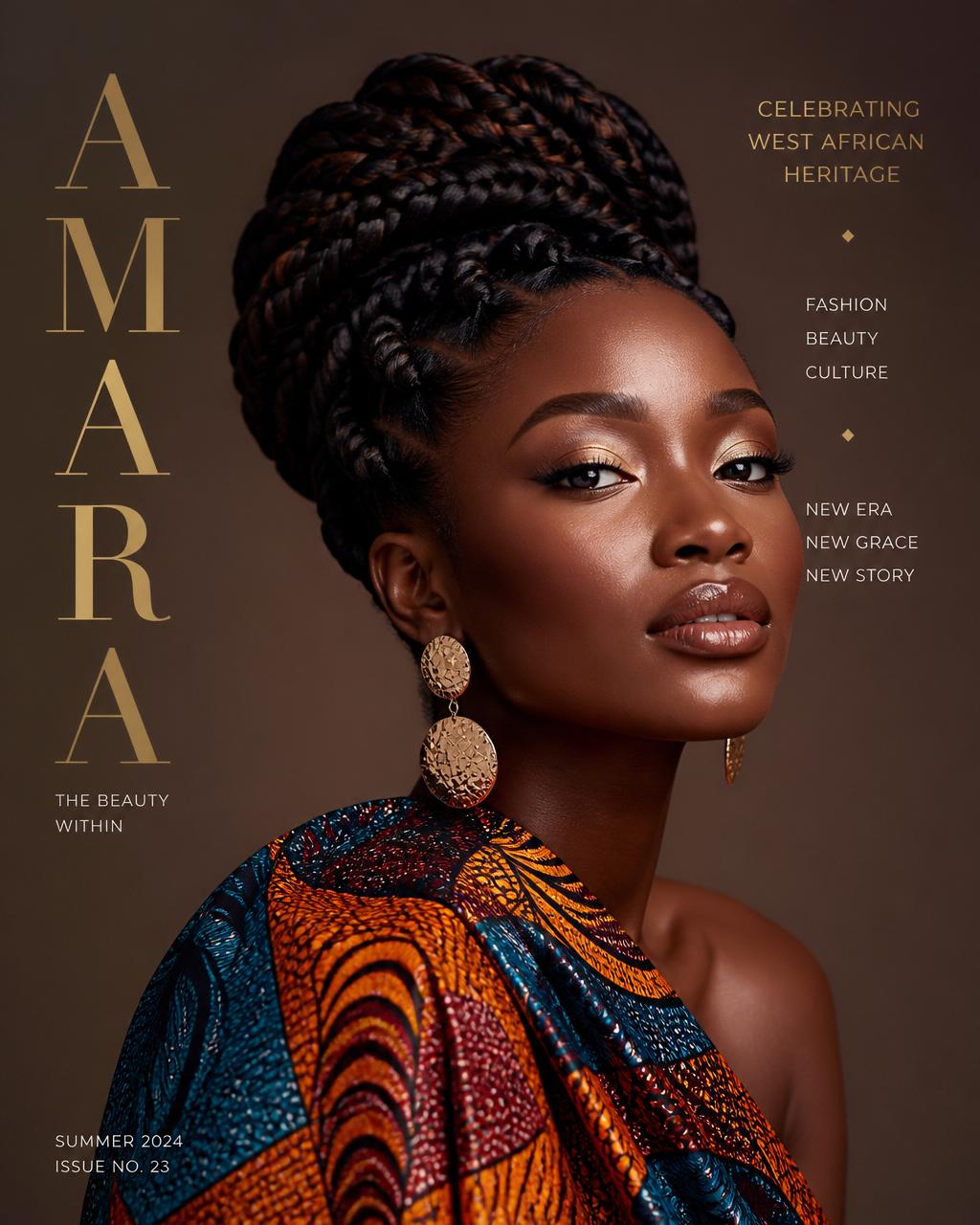
Editorial portrait of a West African woman with sculptural braids and vibrant textileCulture · By Chimamanda Okafor

Lagos Light: Inside the Loudest Fashion Capital You Haven't Visited

Lagos does not whisper. The traffic does not whisper. The markets do not whisper. The fashion does not whisper. To walk through Balogun Market on a Saturday morning is to be hit by more color, more pattern, and more confidence in fifteen minutes than most European cities project in a year. For a long time, this was filed by the international press under 'street style' — a polite way of saying 'not yet serious.' That filing system is no longer tenable. In the last five years, Lagos has become one of the four or five most consequential fashion cities in the world. Nigerian designers are stocked at Browns, Net-a-Porter, and Ssense. Nigerian photographers are shooting campaigns for European luxury houses. Nigerian models — and, increasingly, Nigerian casting directors — are reshaping who appears on global runways. The cultural export is happening at scale, and it is happening on Nigerian terms. The terms matter. The designers we interviewed for this piece — eleven of them, across two weeks in Lagos and a return visit to Accra — are uninterested in being framed as the next anything. They are not the next Paris. They are not the next New York. They are Lagos, and Lagos is enough. The clothes reflect this. Ankara is treated as a material with the same seriousness a Milanese house would give to a wool flannel — sourced from specific mills, cut on the bias, paired with silk and leather and technical fabrics, photographed without exoticism. Tailoring is sharp. Color is loud and intentional. The proportions assume a body that moves. The infrastructure has caught up too. Lagos now has its own fashion week, its own emerging design awards, its own roster of stylists, hair artists, set designers, and post-production houses. A young designer launching a label in 2026 does not need to leave the country to access world-class collaborators. They can, and many do, but it is a choice rather than a necessity. That changes everything about what the work looks like. The beauty story is just as serious. West African skincare brands are formulating around shea, baobab, and marula — ingredients with long traditional use and increasingly compelling clinical data — and exporting them with packaging that does not need to apologize. Hair, of course, is an entire continent of innovation in itself. The braiders, locticians, and natural-hair specialists working in Lagos, Abidjan, and Dakar are setting the global standard, and the global standard is finally noticing. What the rest of the world is slowly understanding is that Lagos is not a story about potential. It is a story about a creative economy that has already happened, that is already exporting, that is already shaping what the next decade of global fashion is going to look like. The only question left is how quickly the international gatekeepers will admit that the gate has been open for some time. For now, the work continues. The light in Lagos is harsh and beautiful. The clothes are made to meet it.

The Weekly Dispatch

Curated international editorial direct to your inbox. No noise, just vision.

As an Amazon Associate, I earn from qualifying purchases.