 Beauty · By Priya Anand
The last ten years of mainstream makeup, filtered through Instagram tutorials and drag-adjacent contouring, taught an entire generation that a finished face required roughly fourteen products, three brushes, and a setting spray. The current moment is doing something quieter and, for many people, much more useful. Skin is being allowed to look like skin again.
Call it the quiet glow. The category name is imperfect, but the tell is consistent: tinted balms instead of full-coverage foundation, a wash of cream blush pressed in with fingers, a dab of clear lip oil, and — if you are feeling formal — a single sweep of mascara. That is the whole face. It takes ninety seconds. It photographs well in daylight and, more importantly, it photographs well in the kind of overhead office lighting that used to make heavy makeup look like a mask.
The formulation science that makes this possible is genuinely new. The last three years have seen a wave of hybrid products — 'skin tints' with SPF and hyaluronic acid, cream blushes stabilized with squalane, lip balms tinted with mineral pigments rather than dye — that behave more like skincare than cosmetics. They sit on the face without settling into fine lines, they last through a normal day without touch-ups, and they come off with a splash of water. The tradeoff, which the industry does not always advertise, is that they demand skin that is reasonably healthy to begin with. Which is precisely why the barrier-repair skincare movement and the quiet-glow makeup movement are the same story told from two directions.
Our beauty desk tested the trend across six skin tones and three climates over eight weeks. The consistent finding was that the products designed for this aesthetic — we are being deliberately vague about brands here because the specific SKUs turn over quickly — work remarkably well on darker skin, where heavy foundation has historically been the most punishing to blend. A well-formulated tint in the right undertone reads as skin, not as coverage, across the entire Fitzpatrick range. That is not something the previous generation of 'natural' makeup could honestly claim.
There is a cultural piece here too, and it is worth stating plainly. The quiet glow is inclusive by design because it does not ask its wearer to hide anything. Freckles, pores, texture, the small asymmetries of a real face — all of it stays visible. For anyone who spent years being told, implicitly or explicitly, that their unedited face was a problem, that is not a trivial shift.
What we are watching is not a rejection of makeup. It is a rejection of the idea that makeup is a corrective procedure. The counter is still full. The palette is still enormous. The technique is simply lighter, faster, and more forgiving. That is a better relationship for most people to have with the mirror.
Quiet, in this context, is not the opposite of loud. It is the opposite of anxious.
 Beauty · By Noah Pierce
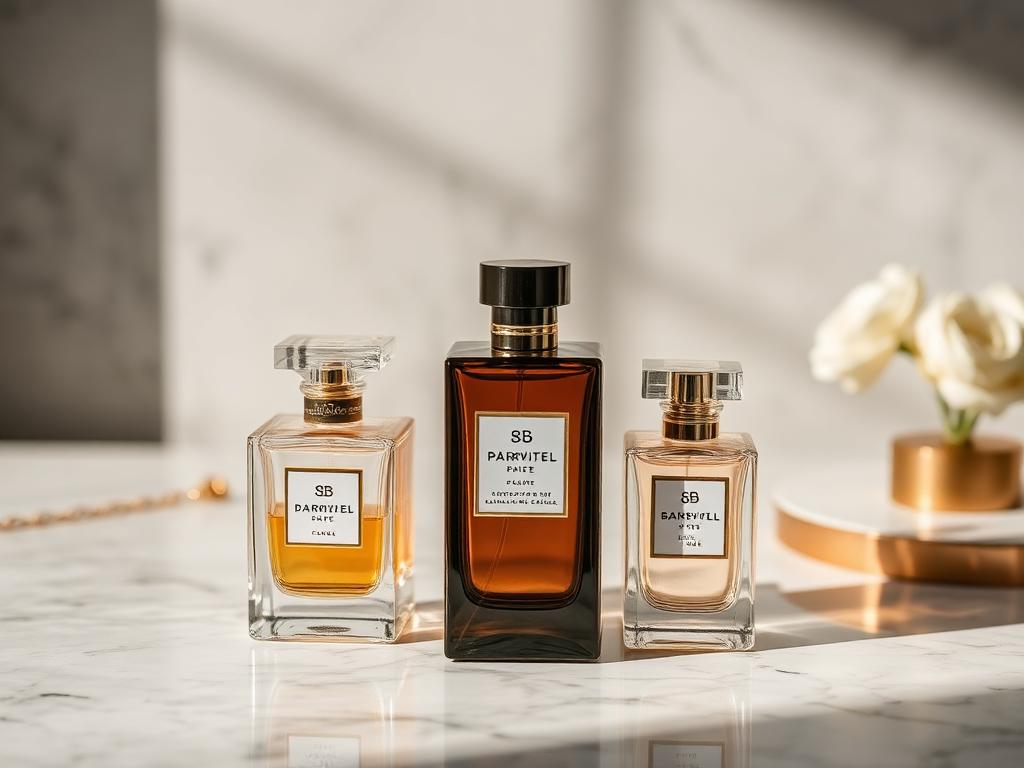
The fragrance shelf, more than almost any other corner of the beauty industry, has spent the last century enforcing a gender binary that never made chemical sense. Rose is not a feminine molecule. Oud is not a masculine molecule. Vetiver, iris, sandalwood, jasmine, ambergris — these are ingredients, not identity claims. The current generation of perfumers, and increasingly the customers buying their work, are treating them accordingly.
The pivot has been most visible in niche perfumery. Houses based in Grasse, Dubai, Berlin, and Los Angeles have been releasing fragrances without gender designation for a decade, and the mainstream is following. Chanel, Dior, and Byredo have all quietly moved their newer launches away from strict pink-or-blue marketing. The bottles look the same for everyone. The advertising features whoever fits the mood of the scent. And the customers, given the option, are choosing what they actually like to smell rather than what they were told they were supposed to wear.
The notes worth building a wardrobe around, in 2026, are a specific short list. Neroli — the oil pressed from bitter orange blossom — has emerged as the daylight scent of choice: bright, slightly bitter, uncomplicated, and universally flattering. Clean musks, particularly the newer synthetic muscones that read as skin rather than laundry, are doing the work of a base note without the powdery weight of the older aldehyde-heavy musks. Oud, once a specialist Middle Eastern note, is now mainstream in both raw and reconstituted forms, and it is being worn as a serious evening scent by people of every gender. Smoked vetiver — vetiver grass processed to bring out its darker, almost tar-like facets — is the current cool-weather signature.
The wardrobe idea is worth taking seriously. The old model of one signature scent, worn every day, is being replaced by a small rotation — three or four fragrances organized by weather, time of day, and social context rather than by season. A neroli or bergamot for morning and outdoor daylight. A clean musk or iris for office and indoor daytime. An oud, amber, or vetiver for evening. A stranger, more idiosyncratic scent — something with immortelle, ambergris, or a specific incense — for the days when you want to be recognized by the way a room smells after you leave it.
The perfumers we interviewed for this piece were, almost to a person, exhausted by the gender question. Four of them told us they had stopped labeling their bottles at all in the last three years and had seen no drop in sales. One, based in Grasse, said the only demographic still asking for explicitly 'masculine' fragrances was, in her words, 'men over seventy and marketing executives.' Everyone else was choosing by nose.
What this adds up to, for someone building a personal scent wardrobe now, is a genuinely wider menu. The good news is that the notes have never been more available or better formulated. The better news is that no one is checking what you are wearing against what you are supposed to wear. The bottle is on the shelf. If you like how it smells on your skin, it is yours.
Scent, at its best, has always been personal. It is finally being allowed to be.