 Fashion · By Marco Salinas
Silk as Armor: The Soft Power of Modern Masculinity
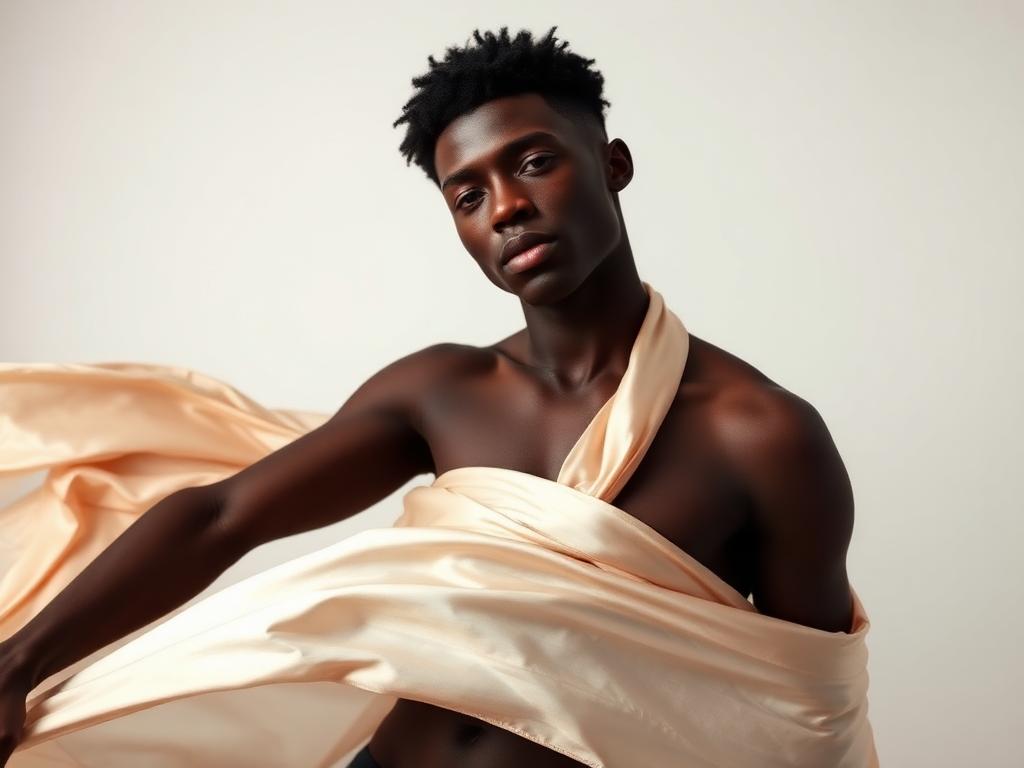
For most of the twentieth century, silk was coded feminine in the Western wardrobe. It lined the interior of a man's suit — a private luxury, invisible to the street — but it rarely appeared on the outside of his body without an apology. That coding is finally coming apart, and the shift is one of the more interesting quiet stories in menswear right now. Walk through the men's shows in Milan this season and silk is everywhere. Not as an accent, not as a lining, but as the primary material of the collection. Zegna sent out silk-cotton overshirts in dusty terracotta and stone. Prada opened with a raw silk trench that skimmed the body without clinging to it. Giorgio Armani, who has been arguing this case since 1980, showed a whole passage of unlined silk jackets in taupe and slate that looked less like tailoring and more like weather — something you put on to move through the world in. Seoul is running the same experiment from a different angle. The K-menswear designers coming out of Hongdae and Seongsu are treating silk with a technical eye: silk-linen blends engineered to hold a shoulder line, silk twills bonded to nylon for weight, silk crepes cut into boxy, dropped-shoulder shirts that read more like sculpture than clothing. Worn open over a fine-gauge tee, these pieces do something a T-shirt cannot: they occupy space around the body without constricting it. That is a specific kind of power, and men are noticing. The cultural shift underneath the material shift is worth naming. A decade of hard tailoring, gymwear, and 'quiet luxury' minimalism trained a whole generation of men to associate power with restriction — the tight jacket, the technical fabric, the compressed silhouette. Silk moves in the opposite direction. It insists that softness, fluidity, and drape are not concessions but sources of authority. The people wearing it right now — musicians in Seoul, chefs in Copenhagen, gallerists in Mexico City — are not soft in any meaningful sense. They are simply refusing the old equation. The production story is quieter but just as important. Silk is one of the few luxury textiles whose supply chain has genuinely improved in the last decade. Small mills in Como, Suzhou, and Bengaluru are producing silk with lower water use, better dye recovery, and traceable sericulture. The material that shows up on the runway now is closer to the material a nineteenth-century tailor would recognize than anything produced in the polyester-heavy years of the early 2000s. What all of this adds up to is a small correction. Silk was always a technical marvel — light, strong, temperature-regulating, capable of holding both structure and drape. The last century simply assigned it to the wrong half of the wardrobe. The current generation of designers, and the men buying their work, are quietly moving it back to where it belongs: on the outside, in the light, worn without qualification. Call it soft power if you want. The clothes themselves do not need the phrase.